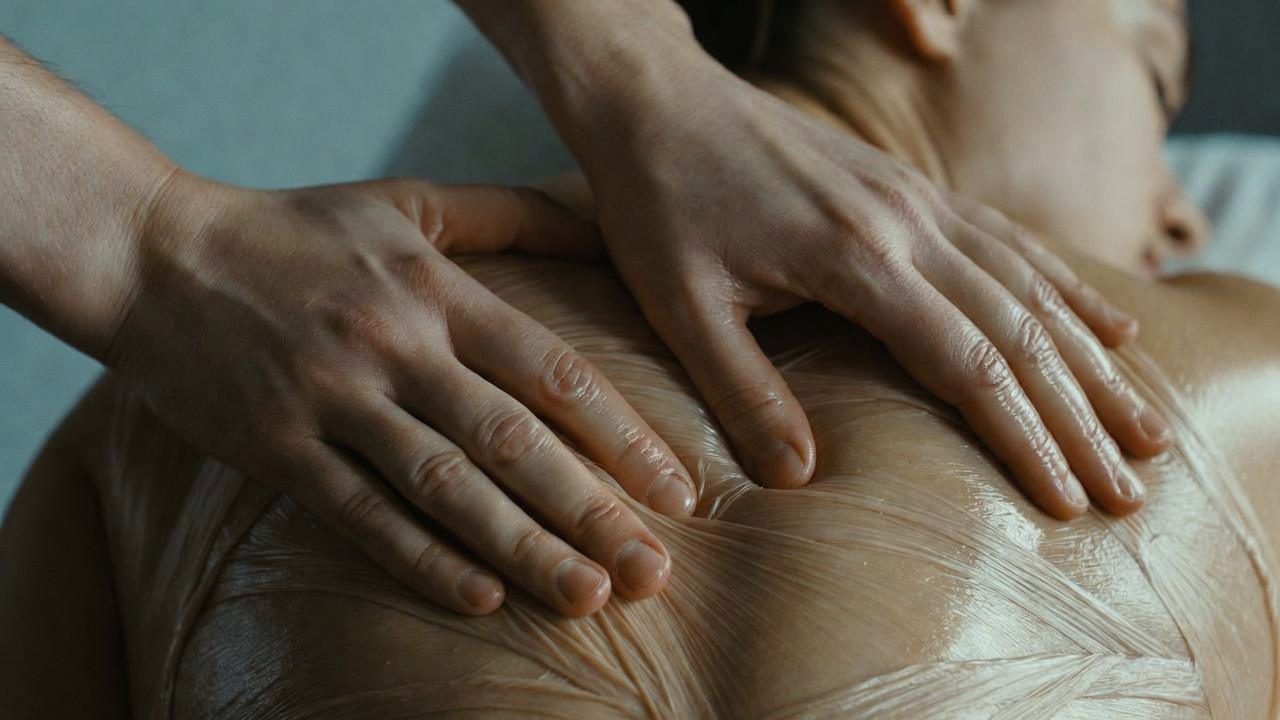
Myofascial Release Bristol / Spiral line Anatomy Trains
Anatomy Trains
Spiral line Anatomy Trains
The Spiral Line wraps around the body in a double helix, linking each side of the skull to the opposite shoulder and hip and down to the arch of the foot. It controls rotation and balance through the trunk.
Route
Where the Spiral Line runs
From the skull the line crosses to the opposite shoulder blade through the rhomboids, wraps around the ribs through serratus anterior and the external and internal obliques to the opposite hip, then runs down the front of the thigh and shin, under the arch of the foot and back up the outside of the leg to the pelvis.
- Splenius muscles
- Rhomboids and serratus anterior
- Obliques
- Tensor fasciae latae and tibialis anterior
- Peroneus longus and biceps femoris
When it tightens
Signs of a tight Spiral Line
An uneven Spiral Line twists posture: one shoulder sits forward, the ribs rotate and one knee may turn in. People notice a trunk that rotates more easily one way, back pain after golf or tennis and knee or foot problems on one side.
Treatment
Releasing the Spiral Line
Rotation of the trunk and hips is tested to each side. James then works the line in sections, between the shoulder blades, around the ribs and obliques, the hip and the front and outside of the leg, finishing with the arch of the foot.
Questions
Spiral line Anatomy Trains: questions answered
Is the Spiral Line involved in golf back pain?
Yes. Rotation sports load the Spiral Line heavily, and a tight line passes extra rotation to the lower back.
Can it affect the knee?
The Spiral Line passes the knee on the way to the arch of the foot, so it influences how the knee tracks.
How do I keep it supple?
Gentle trunk rotations and walking with a natural arm swing help.
Book a two hour session at Cavendish House, Clifton.Leave your name and number and James will WhatsApp you to discuss.
WhatsApp JamesRead next